Labour Conference 2026: what it means for energy, housing and infrastructure
30
September
2026

Author
Emma Carson
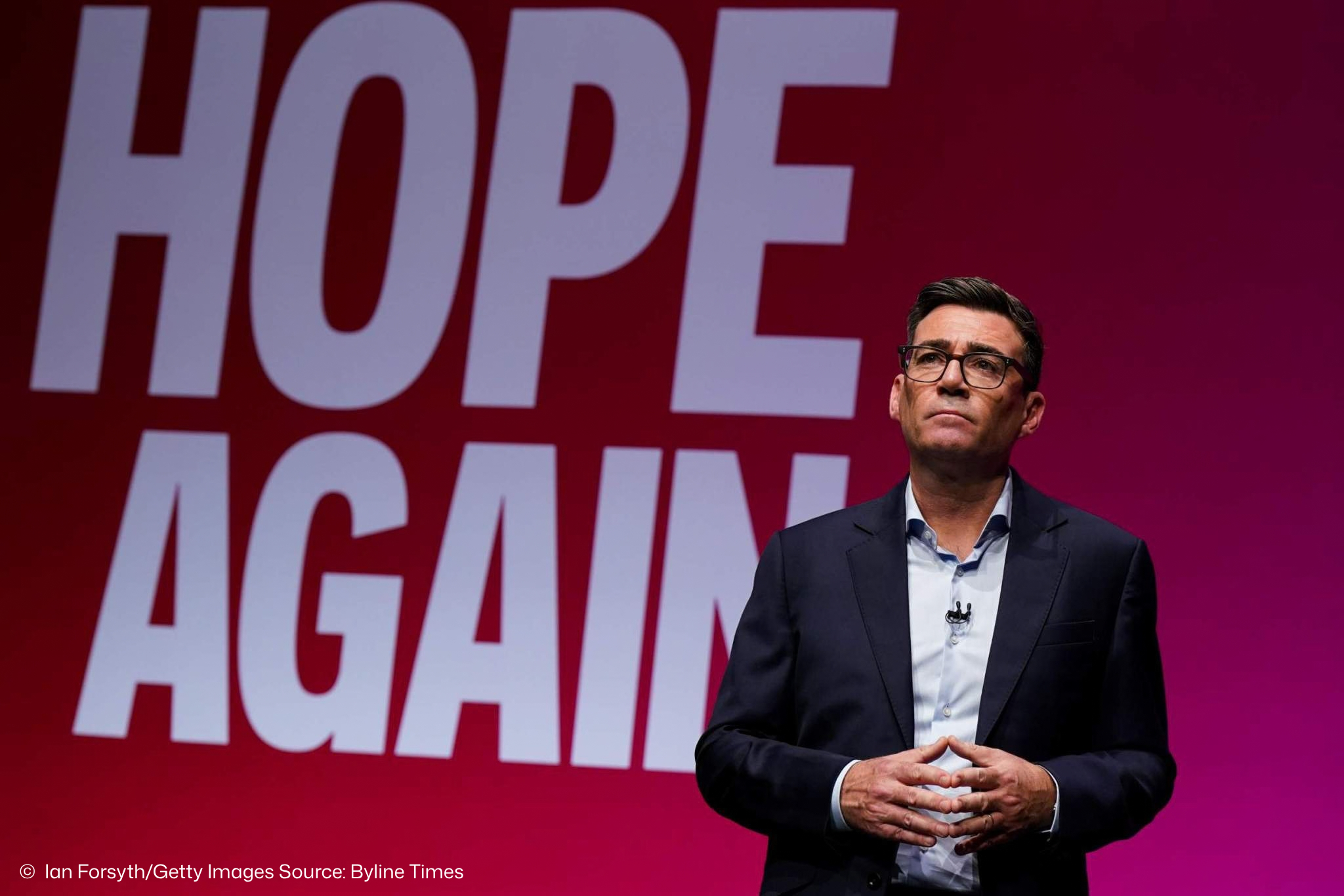
Andy Burnham used his first conference speech as Prime Minister to argue that Britain has been on the wrong path for decades. He blamed a run of deindustrialisation, deregulation, privatisation, austerity and Brexit, and pledged to “make a break with the direction of the past 40 years”.
His central argument was that control had been given away - essential services including homes, water, energy and transport were broken up and sold off. His answer? More public control.
Energy Secretary Miatta Fahnbulleh, Housing Secretary Angela Rayner and Environment Secretary Angela Eagle carried the same message through their speeches and in interviews across the week.
For our sectors, that message came with real announcements. Here’s what was said, and what it could mean.
Energy: Great British Grid
What was announced
The headline energy announcement was Great British Grid, a new publicly owned company set up as a brand of GB Energy. It will invest in the grid, compete with private network operators and work with the private sector to speed up connection. It sits at the centre of a new goal Burnham set out in his speech: to bring UK energy costs in line with the rest of Europe within ten years. To help get there, he has asked Miatta Fahnbulleh to speed up breaking the link between household electricity prices and the international gas market.
With a budget of around £4bn drawn from GB Energy, GB Grid won’t be able to fully fund many projects on its own. Instead, it’s designed to co-invest, making it easier for firms waiting to connect to finance their own connections.
What it means
Grid connection is often the biggest barrier to delivery, so a new public player in this space could help unblock the pipeline. If GB Grid can co-invest in connection infrastructure, self-funding a connection could become a more realistic option for developers currently stuck in the queue.
Reaction has been largely positive. But other pressures remain, including cost and supply chain constraints, and a planning system that is still hard to navigate.
Housing: Your First Home
What was announced
The biggest housing announcement was ‘Your First Home’, an adapted version of ‘Help to Buy,’ which George Osbourn introduced as Chancellor in 2013. The difference is who it’s for: buyers without the ‘bank of mum and dad’. A 2.5% deposit will let people without savings or family help to secure a mortgage. Angela Rayner told conference it will help young families who work hard but find their own home out of reach.
The government will also offer an equity loan of up to 20%of the purchase price, initially interest-free. Eligibility will depend on household income thresholds and local property value caps, and participating developers will contribute to the scheme's funding. More detail, including the launch date, expected in the Budget on 28 October.
Burnham also confirmed that Right to Buy will not apply tonew social homes, so the public sector keeps the stock it builds. He linkedthis to the secure homes his parents and grandparents lived in.
What it means
If Help to Buy is a guide, Your First Home should support new build stock for developers who sign up, boosting demand in a stagnant market and incentivising new build delivery. Economists expect a small impact on overall house prices; the Help to Buy scheme only impacted prices upwards by about 2%. The sector has broadly welcomed the scheme, though it hopes this policy is the start of measures to boost the housing market, rather than the end.
Infrastructure: The Water Bill
What was announced
Angela Eagle will bring forward a new Water Bill as part of a ten-year transformation of the sector. It will repeal the legal ban on public ownership of water companies, which dates back to Margaret Thatcher’s government. The bill will give regional mayors greater powers to hold water companies to account, with more detail to follow on how this will work in practice.
What it means
This is significant symbolically, but it is not a renationalisation of the water industry. It gives government and mayors more options for dealing with failing water companies, but the main obstacle to nationalisation remains: how to compensate existing shareholders.
For now, public ownership seems unlikely and distant. What “public control” does mean is more oversight from local leaders and the ability to penalise underperforming providers. For developers and businesses reliant on water supply, the measures may help to increase capacity across the system and bring down costs.
The detail will be key
Energy, Infrastructure and Development featured prominently across speeches and debates, a clean sign that they are priorities for this government. Much now depends on the detail, and the Budget on 28th October is the next place to look. Luminate will be following closely.
To talk through what these announcements could mean for your projects, contact our team at enquiries@luminateconsultancy.com.
Author
Emma Carson
Share


