Insights from CT Group and Planning Futures: The rise of Reform UK and the Green Party, upcoming local elections and the impact on the built environment sector
1
May
2026

Author
Edward Teather
.png)
Luminate recently attended Planning Futures and CT Group’s briefing on ‘The Politics of Real Estate, Reform, The Greens and the New Reality’ looking at the rise of Reform UK and the Green Party, possible outcomes in the May local elections and the likely impact on the built environment sector.
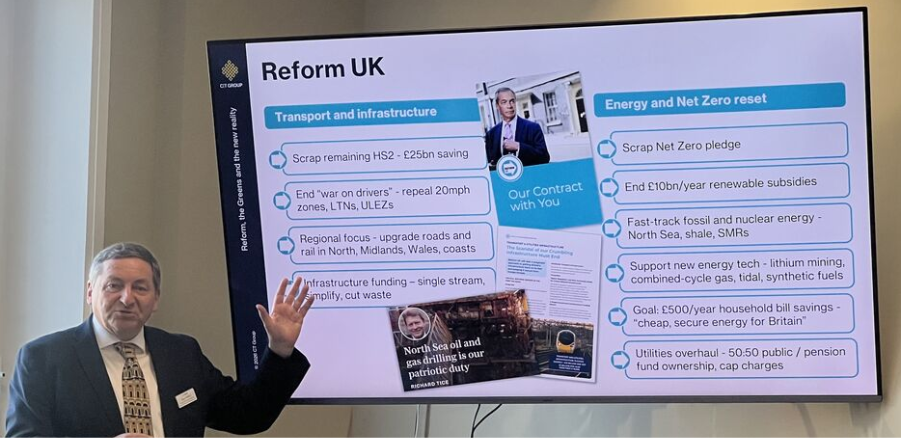
Reform UK
Reform UK is expected to add to its council tally in next month's elections. Having gone from zero to nine in 2025, the party remains high in the polls despite fewer traditional Conservative strongholds on the ballot. For the built environment sector, this means more potential Reform councillors to engage with across leadership, ward and planning committee roles.
Despite this, Reform UK’s housing and spatial development policy remains underdeveloped. A promised 100-day review of the planning system offers vague policy indicators on affordable housing requirements, fast-tracking brownfield development with unspecified tax breaks and introducing “loose-fit” planning for major residential schemes - none of which sit within local council powers, leaving Reform-led development policy largely an unknown quantity.
Green Party
On the back of the historic victory in the Gorton and Denton by-election, the Green party is expected to make serious gains in next month. Key policies include requiring 50% social housing on new developments and limiting housing to small-scale brownfield sites – both of which may deter developers where viability is already marginal.
In the renewables sector, Green councillors are not a guaranteed ally. Despite the party’s clean energy rhetoric, opposition to ‘industrial scale’ projects on habitat or farmland is well documented. Local context and community interests will often take precedence, and engagement with future Green councillors should be tailored accordingly.

What Luminate is watching
The expected gains for Reform and Green will contribute to the volatility already defining British politics – and create real implications for planning and stakeholder engagement.
Both parties have mobilised people who are new to politics, meaning that councils where they perform well are likely to see inexperienced elected members. This can produce “officer-led” authorities where councillors defer to planning officers while they get to grips with the complexity of their new roles.
However, both parties also position themselves as anti-establishment so following officers’ advice may not be the first choice of populist councillors. In Durham County Council, which has been controlled by Reform for the last year, we have seen a clear anti-solar policy from Reform councillors for example, and Green councillors already clash with their officers’ promotion of greenfield development.
For clients navigating the planning process, early and tailored engagement with new councillors will be essential – understanding their priorities and local pressures, alongside a personal understanding of where party policy meets (or conflicts with) individual conviction.
Want to discuss what the new political landscape of Reform UK and the Green Party could mean for your projects? Get in touch with Luminate for insights: enquiries@luminateconsultancy.com
Author
Edward Teather
Share


