Burnham's First Cabinet: What it Means for Energy, Infrastructure and Development
21
July
2026
.png)
Author
Jack Baker-Merry
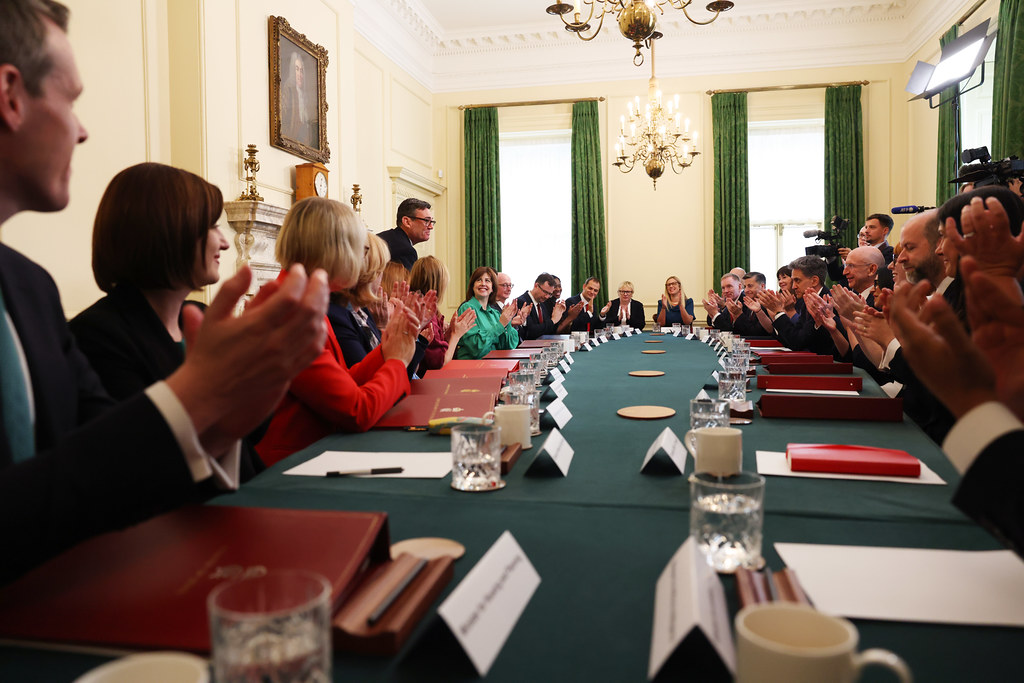
On Monday, Andy Burnham became Prime Minister, succeeding Sir Keir Starmer and becoming the seventh occupant of Number 10 since 2016. Having taken office without a general election, Burnham has pledged his commitment to Labour's 2024 manifesto. Nevertheless, his first Cabinet appointments signal an attempt to define his own priorities, particularly in areas such as energy, infrastructure, housing and regional development.
Personnel will be central to determining whether Burnham can deliver on his priorities. His first Cabinet provides the clearest indication yet of how he intends to govern and where his administration will focus its efforts.
For businesses operating across the energy, infrastructure and development sectors, these appointments offer important clues about policy direction over the coming years.
A Cabinet Built Around Devolution
Burnham entered Downing Street promising to unite both the Labour Party and the country. His first Cabinet reflects elements of continuity, but it also demonstrates a clear desire to establish political distance from the Starmer era.
The departures of senior Starmer loyalists David Lammy, Rachel Reeves and Steve Reed indicate that Burnham is determined to build a government in his own image. However, figures such as Pat McFadden remain in Cabinet, suggesting Burnham is seeking a balance between renewal and stability.
Perhaps the most significant appointment is John Healey's return to Cabinet as Chancellor of the Exchequer. Healey's resignation as Defence Secretary was among the final events leading to Starmer's departure, making his promotion highly symbolic. Another key Burnham ally, Louise Haigh, returns to government as First Secretary of State, Chancellor of the Duchy of Lancaster and Minister for the Cabinet Office, where she will play a central role in coordinating the government's agenda.
The return of Angela Rayner to Housing, Communities and Local Government and the creation of a Cabinet-attending Minister for AI role for Kanishka Narayan further demonstrate Burnham's focus on institutional reform and long-term economic transformation. Many of the AI responsibilities previously held by the now abolished Department for Science, Technology and Innovation have been moved into the new Office for the Prime Minister and Cabinet, led by Louise Haigh.
Some of the responsibilities of the Ministry for Housing, Communities and Local Government have also been transferred to the new No.10 North, including local economic growth policy and local economic growth and devolution strategy, suggesting that Burnham and his core team are likely to be driving these core parts of his agenda.
Taken together, these appointments and changes suggest a government organised around three core themes: devolution, regional economic renewal and public service reform.
Chancellor of the Exchequer: John Healey
The Chancellor is often the most important appointment any Prime Minister makes, and Burnham's decision to appoint John Healey was one of the biggest surprises of the reshuffle.
While Shabana Mahmood and Ed Miliband were widely viewed as the leading contenders, Healey brings Treasury experience, having served as Economic Secretary and later Financial Secretary to the Treasury under Tony Blair and a reputation as an effective and respected minister. He also held responsibility for local government and housing under Gordon Brown.
The appointment supports Burnham's agenda for economic renewal driven by investment in communities, housing and regional growth. Healey's experience in local government and his longstanding interest in regional inequalities align closely with Burnham's own political priorities.
For the infrastructure and development sectors, the key question will be whether Healey is prepared to provide the fiscal support necessary to deliver Burnham's ambitions. Early market reactions suggested investors anticipate increased public spending under the new administration, particularly in areas linked to regional development and industrial renewal.
It will also be interesting to see whether he provides some or all of the additional funding sought by the Ministry of Defence – the issue that prompted his resignation only weeks ago. Burnham has already made the argument that defence spending is investment and can support UK industry and regional growth, and this may be an area where Healey’s two priorities overlap.
Secretary of State for Housing, Communities and Local Government: Angela Rayner
If there is one department likely to sit at the heart of Burnham's project, it is Housing, Communities and Local Government.
Angela Rayner returns to a brief she previously held before resigning in 2025, replacing Steve Reed. Her appointment provides a strong indication that housing delivery, local government reform and devolution will remain central to government policy.
Burnham has repeatedly argued that secure housing underpins economic opportunity and social mobility. He has pledged to drive the largest expansion of council house building in decades, increase town centre regeneration and end rough sleeping. These priorities suggest a greater emphasis on social and affordable housing than under the previous administration.
Rayner is particularly well-placed to advance this agenda. She was instrumental in developing Labour's local government reorganisation programme and has long been one of the party's strongest advocates for devolution. As a fellow North West MP and long-term supporter of devolution, she is likely to be one of the most influential voices in government.
For developers, her appointment is likely to be viewed positively given her track record of supporting development while previously holding the brief. A greater transfer of powers to local leaders may also change how businesses engage with government, increasing the importance of metro mayors, combined authorities and local decision-makers in shaping investment and development projects.
Business Secretary: Jonathan Reynolds
Jonathan Reynolds returns to the Business Department after previously holding the role under Keir Starmer.
A respected communicator with strong links to Burnham's political circle, Reynolds is likely to play a key role in delivering the government's industrial strategy. His involvement in the decision to bring the Scunthorpe Steelworks under public control has already associated him with one of the most significant examples of state intervention in industry in recent years.
Reynolds will be responsible for translating broader political ambitions around reindustrialisation into practical support for investment, manufacturing and regional economic growth.
For businesses and investors, Reynolds' approach to ailing strategic assets will be closely watched. With a decision on the future of Thames Water looming, the government will soon face an important test of how interventionist it intends to be.
Energy Secretary: Miatta Fahnbulleh
Energy policy has been one of the defining issues of Burnham's rise to the premiership. While he has signalled a more pragmatic approach to North Sea oil and gas production, his appointment of Miatta Fahnbulleh suggests continuity rather than disruption in broader energy policy.
Fahnbulleh previously served as Parliamentary Under-Secretary of State for Energy Consumers and has consistently supported the government's net zero agenda. She has also publicly defended decarbonisation policies against criticism from Tony Blair, positioning herself as a strong advocate of the transition to clean energy.
For the renewables sector, her appointment will provide reassurance that the government's commitment to net zero remains intact. At the same time, Burnham's broader political instincts suggest an increased focus on ensuring energy policy supports economic growth, industrial competitiveness and job creation.
The difference may lie less in the destination than in the justification: where Miliband often framed energy policy through the lens of decarbonisation, Burnham and his team appear more likely to emphasise industrial strategy, energy security and economic growth.
Fahnbulleh's professional experience spans housing, local growth, transport and climate policy. This breadth of expertise could make her an influential figure as the government seeks to link energy investment with wider regional regeneration.
Transport Secretary: Heidi Alexander
Transport is another area where Burnham's political convictions are likely to shape government policy.
His most high-profile achievement as Mayor of Greater Manchester was bringing the city’s bus network into public control, and many expect this to inform his broader approach to public transport reform. Already, there are reports that the government will introduce a £2 bus fare cap, expanding the Manchester policy to a national level.
The retention of Heidi Alexander provides continuity and experience. Before returning to Parliament in 2024, she served as Deputy Mayor for Transport in London under Sadiq Khan and played a key role in overseeing major projects including the Elizabeth Line.
A key challenge for Burnham will be translating change into a tangible improvement in people’s lives. A functioning public transport system could be one of the clearest ways for Burnham to demonstrate that his programme is delivering tangible improvements to people's everyday lives.
Alexander’s background as a former London MP and Deputy Mayor may also reassure stakeholders that London's infrastructure needs will not be overlooked as political attention shifts towards regional development.
Secretary of State for Environment, Food and Rural Affairs: Dame Angela Eagle
Dame Angela Eagle takes over at DEFRA at a time when the future of the UK's water industry dominates the department’s agenda.
The immediate challenge is Thames Water, which continues to face severe financial pressures. Reports that the government is considering placing the company into a Special Administration Regime suggest ministers are prepared to consider significant intervention where critical infrastructure is involved.
For investors, this could become a defining test of the Burnham government's approach to regulated industries. Ministers will need to convince both the public and financial markets that they can balance service delivery, accountability and investment attractiveness.
Although Eagle's direct experience in environmental policy dates back to the early years of the Blair government, she brings considerable ministerial and parliamentary experience to the role.
What Does This Mean for Our Sectors?
The clearest message from Burnham's first Cabinet is that devolution, housing and regional economic renewal are at the heart of his government.
For the development sector, the appointments of Angela Rayner and John Healey suggest significant opportunities for social housing, town centre regeneration and place-based investment. Greater powers for local decision-makers are also likely to increase the importance of engagement with combined authorities, metro mayors and local leaders.
In energy, the departure of Ed Miliband creates some uncertainty, but the appointment of Miatta Fahnbulleh points towards policy continuity on net zero and renewable energy. While Burnham may adopt a more pragmatic tone on energy security and domestic production, there is little indication of a fundamental shift away from decarbonisation.
For infrastructure, Heidi Alexander's retention provides stability in transport policy, while Jonathan Reynolds' return to the Business Department reinforces the government's commitment to industrial strategy and economic intervention where necessary.
Ultimately, Burnham's first Cabinet suggests that while there is much continuity with the Starmer era, the centre of gravity is shifting. Housing delivery, devolution and reindustrialisation appear set to become the defining features of the new administration. Rather than representing a wholesale change of direction, Burnham's early appointments point towards a government that intends to use the machinery of the state, and increasingly devolved institutions, to drive regional growth and economic renewal.
If you want to discuss how these changes could impact your projects, please do get in touch with the team.
IMAGE CREDIT: “Prime Minister Andy Burnham hosts first weekly Cabinet Meeting” by Number 10, CC BY-NC-ND 4.0
Author
Jack Baker-Merry
Share


